Mom mental load: how to make the invisible work visible
The mental load is the invisible work of running a household: the remembering, the planning and the noticing. Here's what it is, why it lands on one person, and how to actually share it.
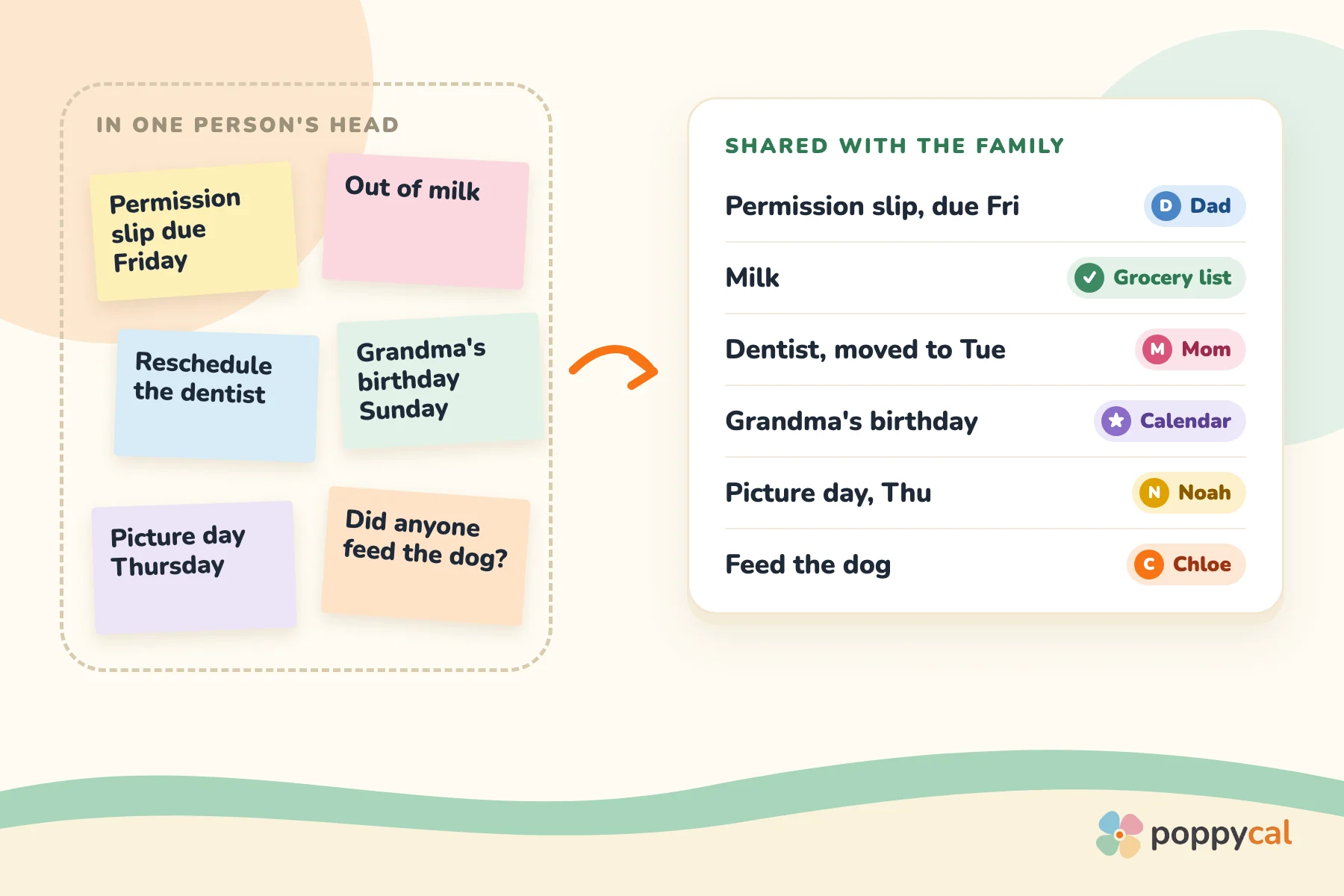
The mental load is the invisible work of running a household: the constant remembering, planning and noticing that keeps a family going. It's knowing the permission slip is due Friday, that you're almost out of milk, that the dentist appointment needs to be moved and that Grandma's birthday is next week. None of it shows up on a chore chart, but all of it takes up room in one person's head.
In most families, that person is Mom. Any one of those tasks is small. What wears her down is that they never stop arriving, and that being the one who remembers all of them becomes a full-time job running quietly underneath the visible ones.
This post covers what the mental load is, why it piles up on one person, and what actually helps, which is getting the invisible work out in the open where the whole family can carry it.
What the mental load actually is
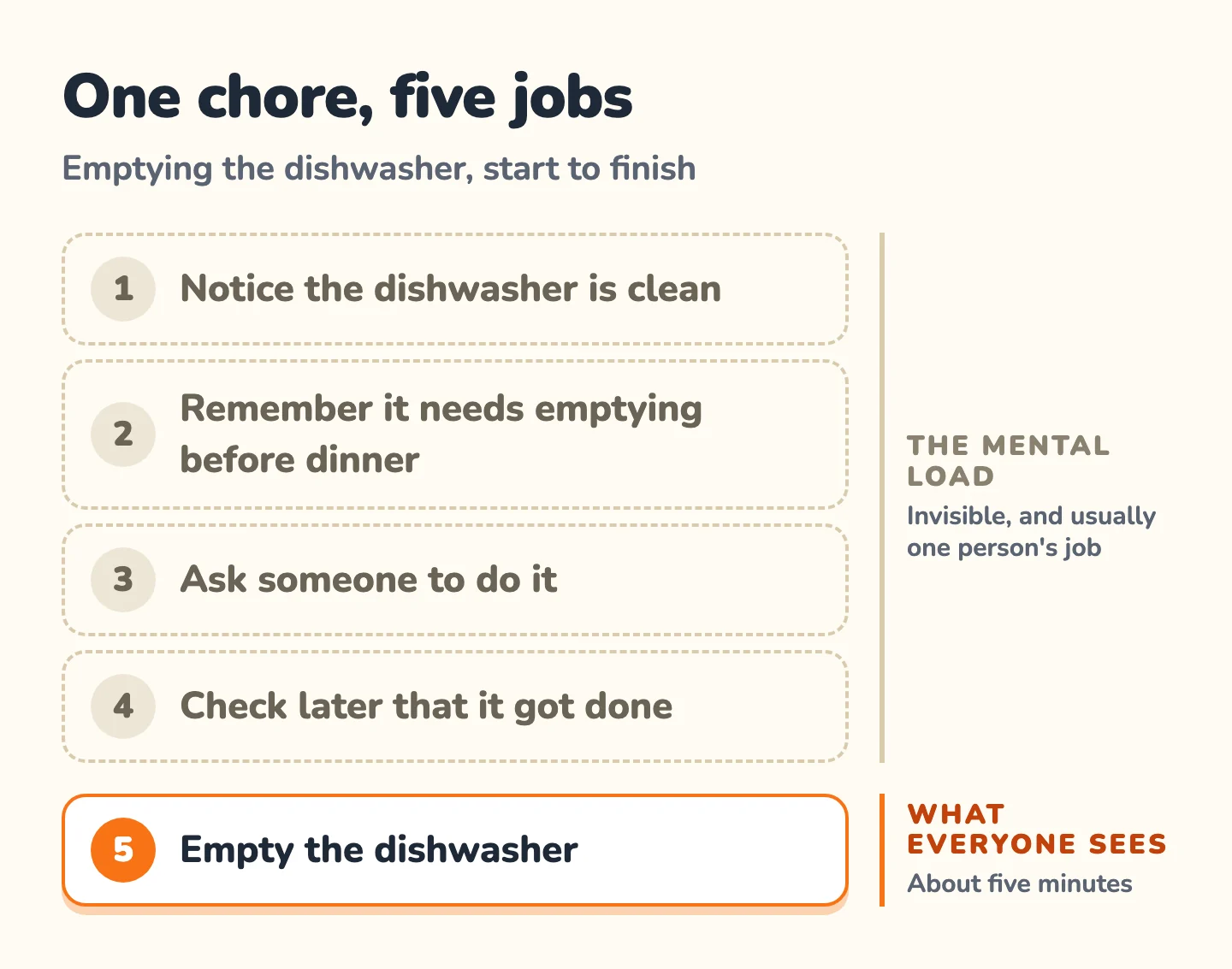
Doing a task and managing it are two different jobs. Anyone can empty the dishwasher when asked. The mental load belongs to the person who notices the dishwasher is clean, remembers it needs emptying, asks someone to do it and checks later that it got done.
The term was popularized by the French illustrator Emma in her 2017 comic "You Should've Asked," which put a name to a frustration millions of women recognized right away. Her point was that the cooking and the laundry come with a project-management job on top of them: anticipating, deciding, delegating and following up. That job is real work, and it stays invisible because it happens in someone's head instead of on the kitchen floor.
Why it lands on one person
It usually happens quietly. One person becomes the manager, and everyone else becomes a helper waiting for instructions.
"Just tell me what you need me to do" sounds generous, but it leaves all the noticing, planning and remembering with the manager. Knowing what needs doing and when is the hard part, so whoever has to ask is still carrying the load.
That's how a family can split the physical chores evenly and still leave one person completely drained. The tasks got shared, and the thinking about the tasks stayed with her.
Make the invisible work visible
You can't hand off a to-do list that only exists in your head. If you have to explain the whole system before anyone can help, it's faster to do it yourself, which is exactly why so many moms end up carrying it alone.
So the goal is to move the load out of your head and into a place the whole family can see. Once the work is visible, other people can pick it up without being asked, decisions get made once, and you stop being the only person who knows what's going on.
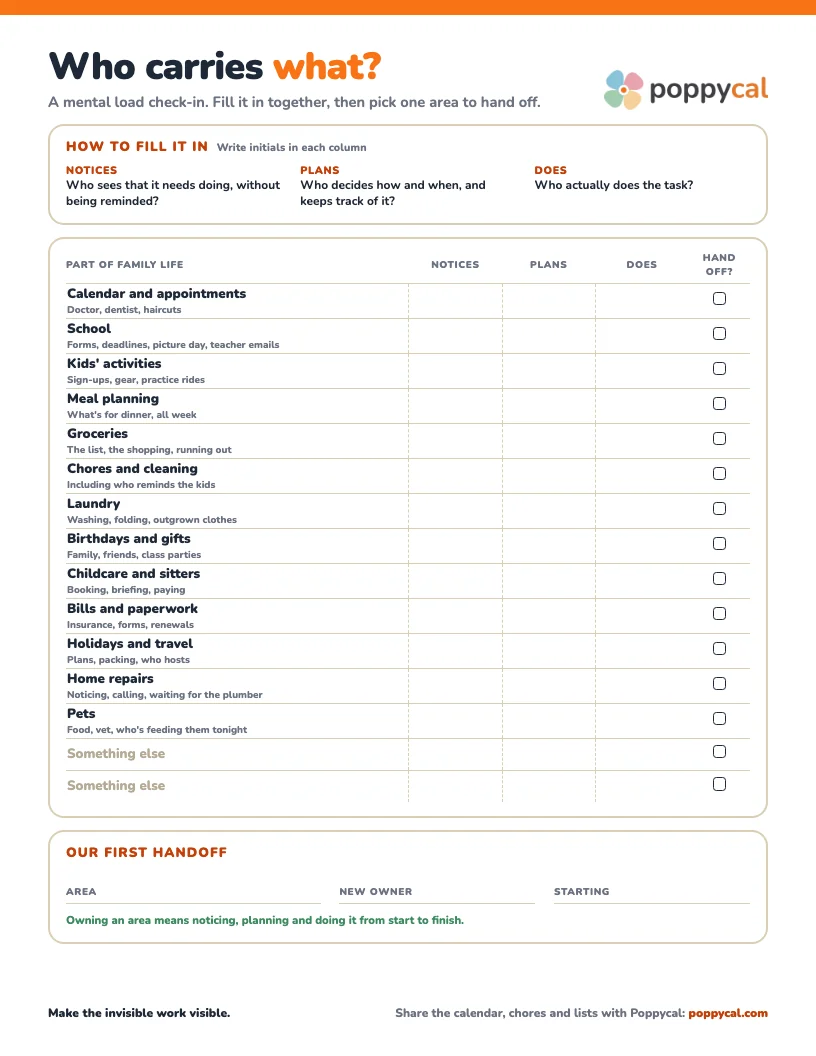
A good first step is writing it all down. Sit down with your partner, go through each part of family life, and mark who notices it, who plans it and who actually does it. If the load is uneven in your house, it will show up in the first two columns.
Free printable
Who carries what? A mental load check-in
Thirteen parts of family life with room to mark who notices, plans and does each one, plus a spot to pick your first handoff.
Download the PDFThen work through these four changes.
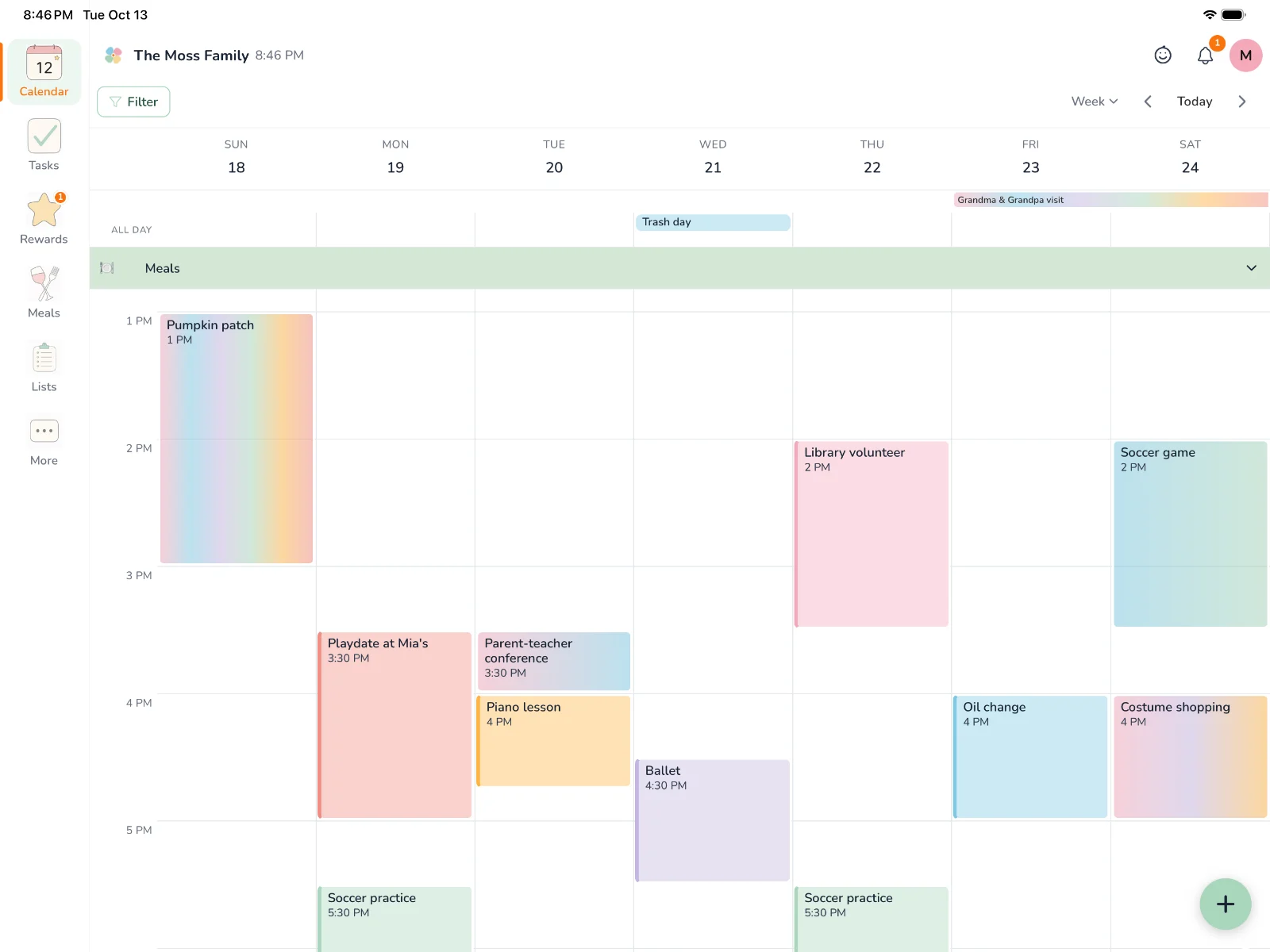
Put the schedule where everyone can see it. A shared family calendar keeps practices, appointments and deadlines somewhere other than your memory. When each person has their own color, one glance tells the whole family who's where, and "I didn't know about that" stops working as an excuse.
Give each task an owner. Reminding a kid to feed the dog every night is mental load. When feeding the dog is simply that kid's job, on their own list and checked off by them, the tracking moves off your plate and onto theirs.
Turn repeat decisions into defaults. Some questions come back every day: what's for dinner, whose turn it is, what the morning routine looks like. Decide them once and let them repeat. A meal plan made on Sunday answers "what's for dinner" for the whole week in one sitting, which beats seven separate 5 p.m. scrambles.
Make handoffs self-serve. When the babysitter, a grandparent or your partner can look up the bedtime routine and the wifi password on their own, you stop being the household help desk everyone has to call before anything can happen.
How Poppycal helps carry the load
We built Poppycal around this idea. A family app should take the running list out of one person's head and put it somewhere the whole family shares, without turning into one more thing for that person to manage.
The shared calendar syncs both ways with the Google, Apple and Outlook calendars you already use, so an event added on your phone shows up on your partner's calendar and the kitchen tablet without a group text. Give each person a color and the week reads at a glance.
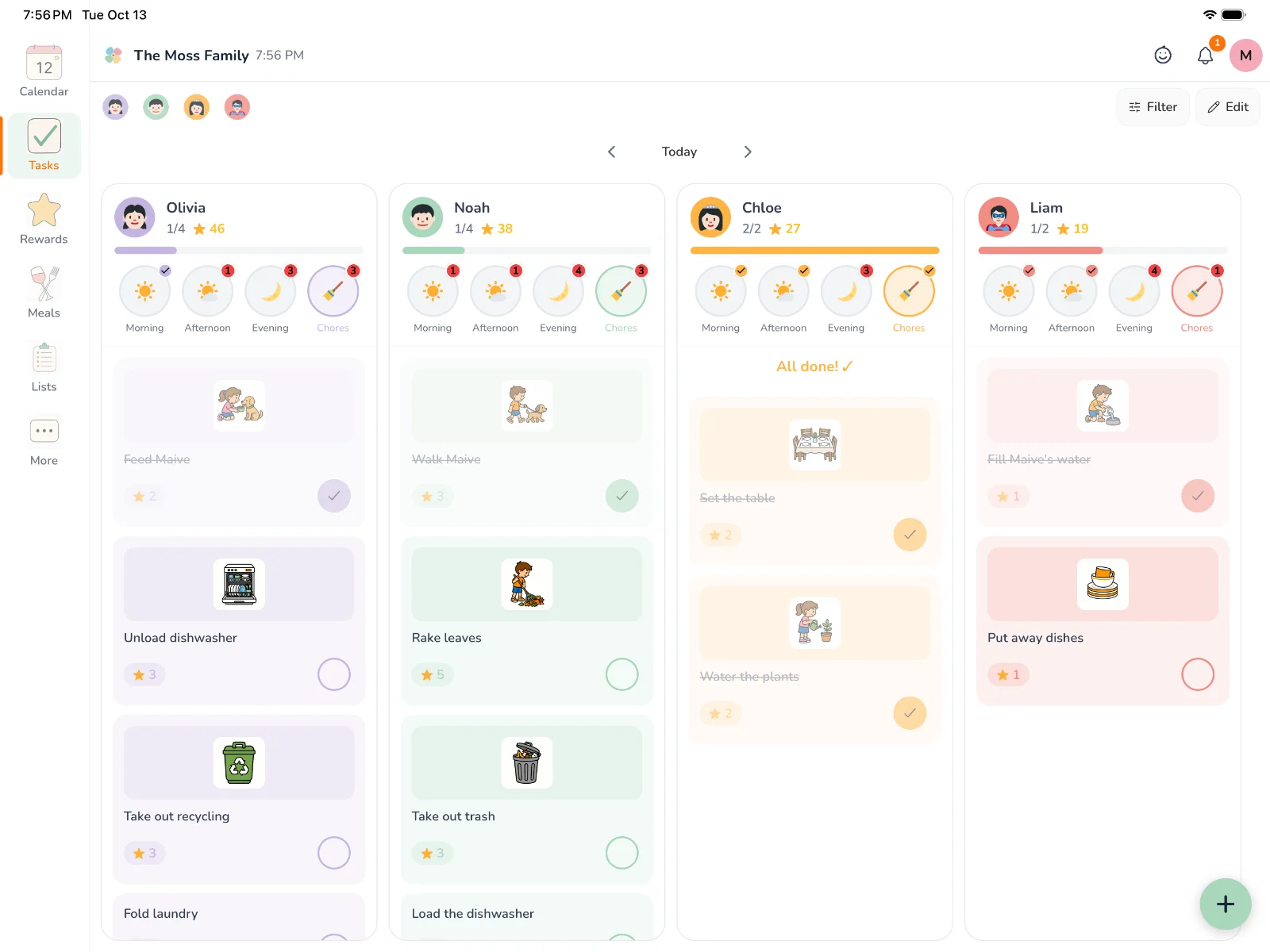
With chores, each kid gets their own list, checks off their own tasks and earns a star the moment they do, so you don't have to hover to confirm it happened. Set up a morning, afternoon and evening routine once and it comes back on its own every day.
Meal planning and a shared grocery list take care of the two questions that come up most: what's for dinner, and what do we need from the store. Decide the week once and it stays decided. Here's the fifteen-minute routine we use to plan the week.
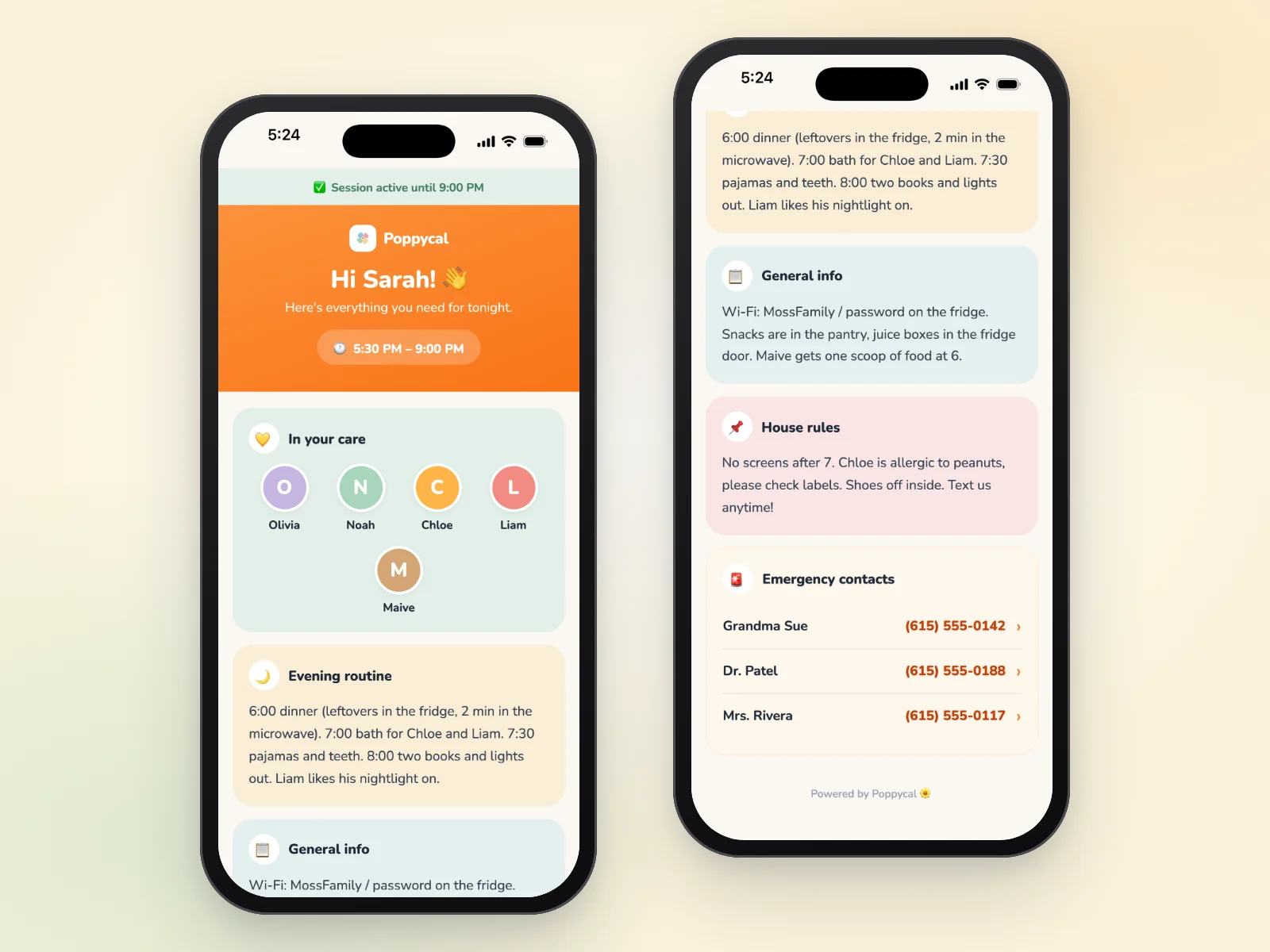
And when you hand the evening off, Babysitter Mode puts the whole briefing into one link: who's home, the routine, the house rules and the wifi. The sitter opens it in any browser with no app to download and no account to set up, so you won't get a string of texts while you're trying to enjoy a night out.
None of this makes the work disappear. It means the work stops living in one person's head.
Frequently asked questions
What's the difference between the mental load and emotional labor?
The two overlap. The mental load is the thinking work of running a household: remembering, planning and tracking. Emotional labor is a term from the sociologist Arlie Hochschild, who used it for managing feelings as part of a job. Today it's often used for managing feelings at home too, your own and everyone else's. Many people use the two phrases interchangeably for the invisible work of keeping a family running.
How do I explain the mental load to my partner?
Talk about the managing more than the doing. The tiring part is being the only one who notices, remembers and follows up on everything. The worksheet above helps because it puts the noticing and planning on paper where you can both see them. From there, agree to hand over whole areas from start to finish, so your partner owns the kids' activities from sign-up to pickup and doesn't wait to be told what to do.
Can an app really reduce the mental load?
It can help by holding the information so you don't have to keep it in your head. When the schedule, chores, meals and routines live somewhere the whole family can see, other people can act without being briefed first. The relief comes from that shared view, which is why a calendar on the fridge helps too.
Isn't a shared calendar just one more thing to keep updated?
It replaces updating you're already doing in your head and over text. If the calendar syncs both ways with the one you already use, there's no separate system to maintain. You add each event once, in a place everyone can see, and stop relaying it from person to person.
You don't have to carry it alone
Giving the mental load a name is a good start. Sharing it starts with getting the invisible work out of your head and into the open, where the people around you can see it and pick it up.
Poppycal gives your family one shared place for the calendar, chores, meals and routines, for $4.99 a month or $39.99 a year for the whole household. You can try it free for 14 days, no credit card required, or take a tour of everything it does.
- mental load
- family organization